Podcast: The Great Famine in Ireland with Padraic X. Scanlon

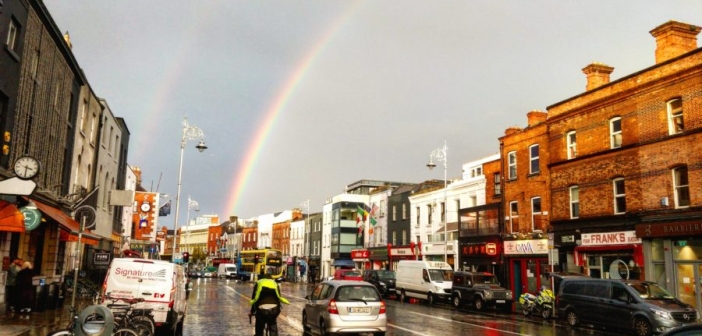
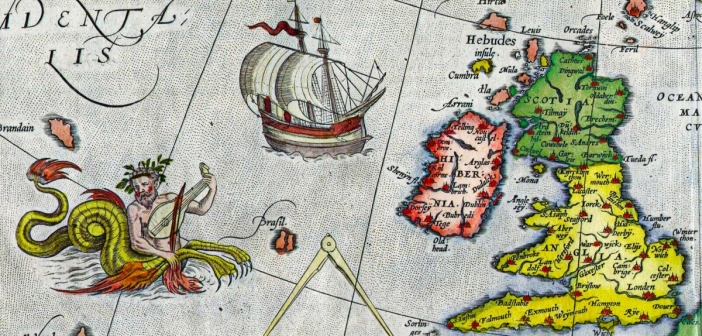
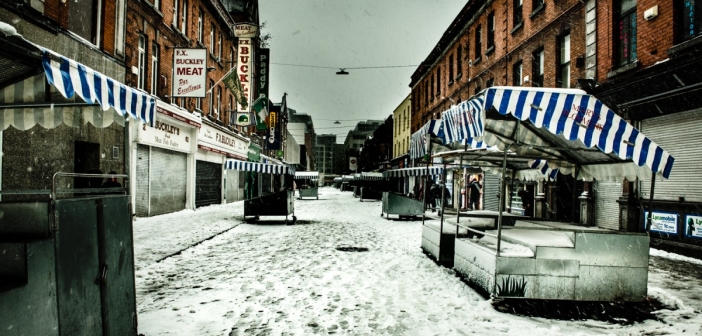
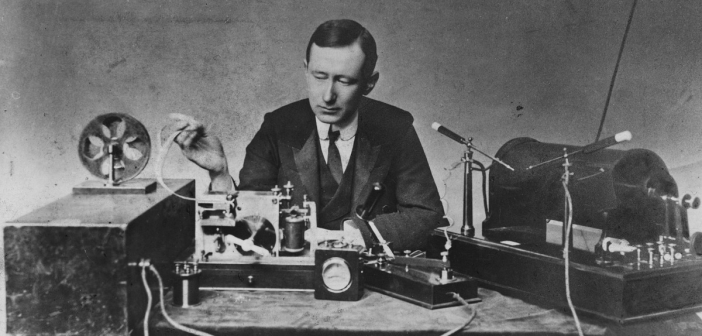
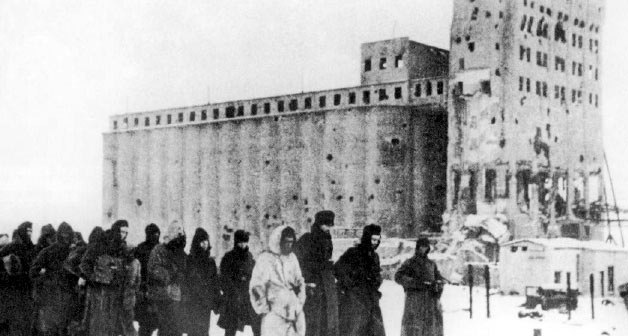
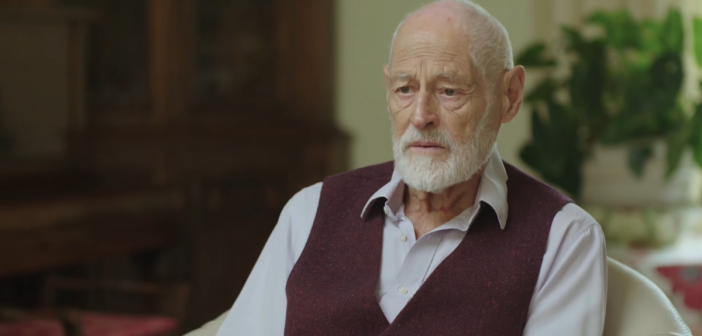
Padraic X. Scanlan joins Frank Armstrong to discuss his book Rot: A History of the Irish Famine, which explores the modernity of Ireland’s experience with potato cultivation, culminating in the arrival of the dreaded blight phytophthora infestans in 1845.

Nordic Mythology & Iceland’s Sustainable Transformation

Renewable energy transitions have increasingly been recognised not only as technological and environmental imperatives but also as drivers of community resilience, socio-economic innovation, and energy security. In the Nordic region, ambitious renewable energy policies and high shares of renewables in energy consumption reflect a shared commitment to sustainability that encompasses social participation, democratic engagement, and … Read more

Podcast: Ward Bosses and Alligator Bishops: Irish Americans and Tammany Hall with Terry Golway

For this Saint Patrick’s Day episode, Luke Sheehan asked Irish-American historian and New York history expert Terry Golway to help create an overview of the Irish American experience, with a focus on post-famine migration and the infamous Tammany Hall. Episode Credits: Host: Luke Sheehan Music: Loafing Heroes – ​​https://theloafingheroes.bandcamp.com Produced by Massimiliano Galli – https://www.massimilianogalli.com … Read more

‘The Deep and Inveterate Root of Social Evil’

  It would surely be a great piece of good fortune for Paddy … if English cultivation could drive all his fairies out of his head Examiner, June 10, 1843, British Library Newspapers What hope is there for a nation which lives on potatoes? Charles Trevelyan At the end of March last year, during what … Read more

Carnsore Point: Ireland Goes Nuclear

In 1977 Fianna Fáil Minister for Industry and Commerce, Desmond O’Malley, announced the government’s intention to build a nuclear power reactor at Carnsore Point, where the Irish Sea meets the southern Atlantic. Members of Cork Friends of the Earth, along with other groups and individuals, decided to oppose the idea. Four rallies by opponents of … Read more

360-Degree Leadership in Times of Crisis

‘Friends, Romans, countrymen, lend me your ears’ – it takes a lot more than these kind of words today to get listened to, followed, and to exert influence and effectiveness over time. Effective change leaders remove barriers to employee success. Leaders of unsuccessful change tend to focus on results, and more often than not employees … Read more

Grandmothers’ Fight for Stolen Generation

Review: A Flower Travelled in my Blood: The Incredible Story of the Grandmothers who Fought to Find a Stolen Generation of Children by Haley Cohen Gilliland. Between 1975 and the first half of 1978, it has been estimated that the Argentinian dictatorship under Jorge Rafael Videla killed and ‘disappeared’ 22,000 people. As far back as 1984, … Read more

Diabolical Healers

Intriguingly, women held more or less equal power in many of the African continent’s varied societies prior to its violent colonial subjugation. Gender equality was, however, viewed as a challenge to imperial hegemony by colonial administrators – more familiar with women in Counter-Reformation Europe attired in nun’s wimples ‘in order to prepare them for a … Read more

The Journalist as Public Intellectual

Many of those featuring in this series wrote top class journalism, including Albert Camus, Noam Chomsky, Voltaire and George Orwell. None of them, however, are pre-eminently or exclusively associated with their journalism. There is one intellectual who is however. That of course is Christopher Hitchens – the non pareil journalist of our recent age, and … Read more

Public Intellectuals: Voltaire

Voltaire (1694-1778) is the self-invented name of François-Marie Arouet, riffed on a childhood description of him as a determined little man. He belongs in the Panthéon in Paris, old wise and wizened, but eyes sharp and gleaming through the stone. The central figure in the Enlightenment, Voltaire’s legacy is now being systematically dismantled worldwide. It … Read more

Review: Chile in Their Hearts

U.S. citizens Charles Horman and Frank Teruggi were detained and executed in Chile during the early days of the US-backed dictatorship of Augusto Pinochet. Investigative reporter and author John Dinges, who has written extensively about Latin America and Operation Condor, investigates the earlier premise that both men were murdered by the Chilean military upon direct … Read more

Public Intellectuals: Leonardo Sciascia

Corruption is worse than prostitution; the latter might endanger the morals of an individual. The former invariably endangers the entire country. Karl Krauss Leonardo Sciascia or Shaza was an Italian or rather Sicilian political journalist, an elected radical member of the Italian parliament and the most prominent anti-mafia and indeed anti-corruption critic of his time. … Read more

Public Intellectuals: Charles Darwin

In a court case in Kent recently I detoured to the small village of Down near Orpington where I had the privilege of visiting the Home of Charles Darwin. This is the residence where he wrote both The Voyage of The Beagle (1839) and The Origin of The Species (1859). It is a symptomatic of … Read more

Putting the ‘Public’ Back into Enterprise

Part I of this series examined Mario Draghi’s recent proposals for reforming the E.U.’s economic model. It explained how one key tool was missing from his new industrial policy toolkit. That missing tool was public enterprise. Here in part II, we take a closer look at commercial State-Owned Enterprises (SOEs). Particularly regarding their role at … Read more

The Missing Link in Draghi’s E.U. Plan

This article is the first in a forthcoming three-part series by Cillian Doyle on the role of the state in a mixed economy. Last month there were two seemingly unrelated events which in an Irish context can be connected. On September 9th Mario Draghi’s published his 400-page report on improving E.U. competitiveness. The report provides … Read more

Ivor Browne R.I.P

It’s hard for those of us who work in the field of psychedelic-assisted therapy to put into words how much of a visionary Dr. Ivor Browne was. He was a pioneer of LSD psychedelic-assisted therapy in San Francisco and London in the 1950s. He also pioneered the therapeutic use of LSD, ketamine and holotropic breathwork … Read more

Responsible Business

The ten principles of the U.N. Global Compact, formed in 2000, sought to realign business as a force for good. They include compliance and support for human rights; upholding good labour practices and eliminating discriminatory and forced labour; taking up proactive environmental stewardship; and fighting corruption. Several institutions across the planet joined the Compact, including … Read more

Fine Dining in Ireland During WWII

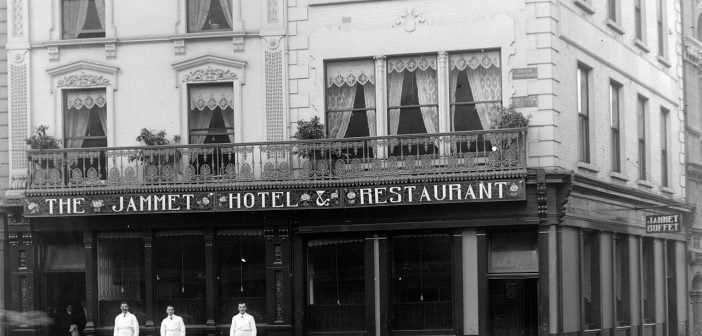
Dublin was the second city of the British Empire until end of the eighteenth century. After the Act of Union of 1801, however, many prosperous land owners departed the city and, indeed, by the end of the nineteenth century Belfast’s population was greater. The former did, however, retain a residual aristocracy who formed the clientele … Read more

The Restaurant Experience

The anthropologist Jack Goody pours scorn on modern dining habits. Solitary consumption he says reverses the customary habit of ‘public input and private output’, making eating alone ‘the equivalent of shitting publicly.’ Dining, after all, as the great gastronome Jean-Anthelme Brillat-Savarin, put it: ‘is the common bond which unites the nations of the world in … Read more

Hitching the Plough to the Stars

Paul O’Brien’s biography, Sean O’Casey, Political Activist and Writer (Cork University Press) is a timely re-assessment of an often controversial, figure whose place in the literary canon is, O’Brien argues, is insufficiently acclaimed. It coincides with the hundredth anniversary of Druid’s production of O’Casey’s Dublin Trilogy: ‘The Plough and The Stars’, ‘Juno and the Paycock’ … Read more

Cassandra Voices
Privacy Overview

This website uses cookies so that we can provide you with the best user experience possible. Cookie information is stored in your browser and performs functions such as recognising you when you return to our website and helping our team to understand which sections of the website you find most interesting and useful.