Gerry ‘the Monk’ Hutch Challenges Gangsters Inc.

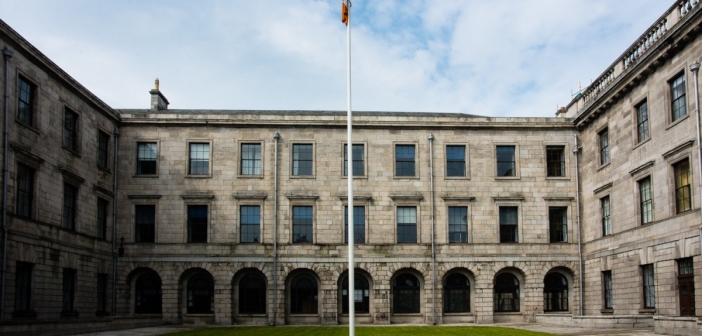
At their inauguration, public leaders must swear to uphold unwritten law and weep to atone for their presumption to hold office – Seamus Heaney, ‘From the Republic of Conscience’ With a Dublin Central by-election on the horizon, Irish politics appears to be descending into GUBU. The ‘grotesque, unbelievable, bizarre and unprecedented’ prospect of alleged crime … Read more

In God We Trust Inc.

Ryszard Kapuściński in Imperium (1993) warned of three plagues, or contagions threatening the world: nationalism, racism and fundamentalism. He further identified one shared trait or a common denominator in ‘an aggressive all powerful total irrationality,’ arguing that ‘[a]nyone stricken with one of these plagues is beyond reason. In his head burns a sacred pyre that awaits … Read more

Political Art – from Banksy to Weimar

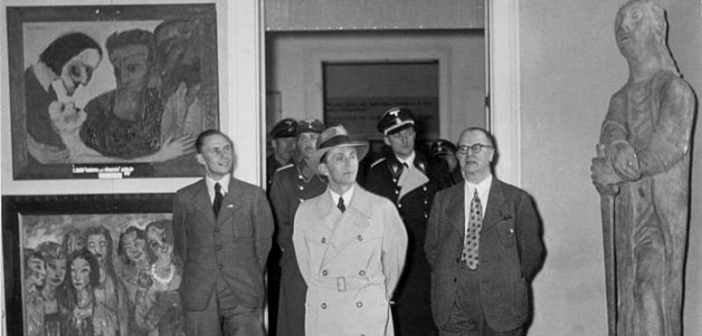
A reliable source, who happens to be representing him, now informs me that Banksy is to be prosecuted over his RCJ mural. This form of artistic censorship, leads me to consider the important role that art has played in terms of political commentary, and how some of the masterpieces in this genre resonate with contemporary … Read more

On the Question of Immigration

The European Convention on Human Rights (ECHR) is perhaps best understood as the culmination of the Enlightenment tradition of constitutionalism, hedged in legalistic language of proportionality and balance. It asserts that people have a right – or at the very least the right to have rights – to rely on the Convention when a domestic … Read more

Hooligans, Thugs and Gangsters

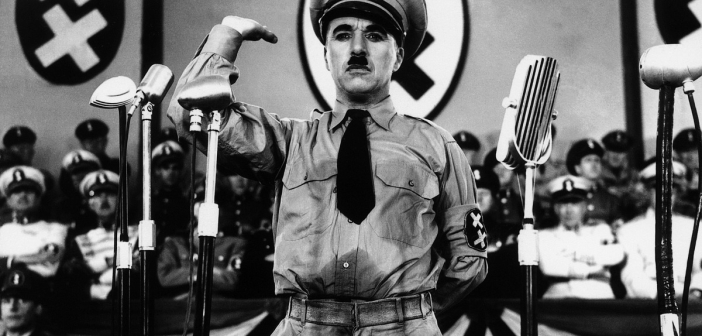
  Our world, especially the United States, is now becoming a Gangster Enterprise where brutality and soma-induced compliance maintain the ruling order. Sadly, the weapons of resistance against authoritarianism are not readily apparent. Housing rights and in some cases a right to life are threatened at all levels. We experience deep-seated inequality and a worldwide … Read more

Distortions Of Language

  What tangled web we weave when our intention is to deceive? Sir Walter Scott The distortion of language lies at the heart of the greatest of threats to human civilisation. It now effects all aspects of the public and civic sphere, from court rooms to journalism to the expression of corporate-political elites. It is … Read more

Banksy and Protest Rights: The View from The Robing Room

As I sauntered from the Old Bailey past the RCJ the Banksy painting caricaturing a judge attacking a protester was no longer even a ghostly shadow, but it very much remains in the public domain, after reports emerged that it had been reported as criminal damage. On September 25, on Old Brompton Road, a comprehensive … Read more

On Rhetoric

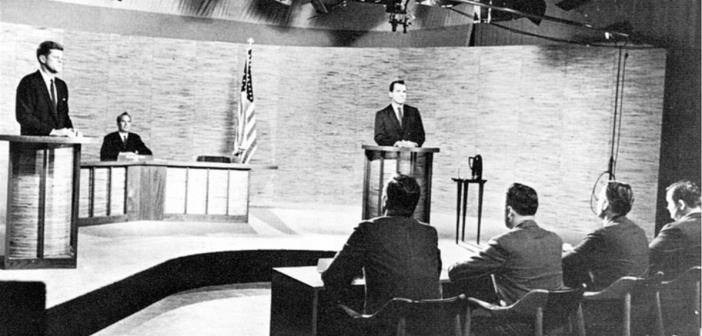
What makes for fine rhetoric in an age of disinformation? Clearly, this is distinct from the techniques employed by corporate motivational speakers, tele-evangelists or self-help gurus. A useful starting point is to examine Aristotle’s views on Rhetoric, who argued that speech can produce persuasion (pistis) either through the character (êthos) of the speaker, the emotional … Read more

The Journalist as Public Intellectual

Many of those featuring in this series wrote top class journalism, including Albert Camus, Noam Chomsky, Voltaire and George Orwell. None of them, however, are pre-eminently or exclusively associated with their journalism. There is one intellectual who is however. That of course is Christopher Hitchens – the non pareil journalist of our recent age, and … Read more

Public Intellectuals: Voltaire

Voltaire (1694-1778) is the self-invented name of François-Marie Arouet, riffed on a childhood description of him as a determined little man. He belongs in the Panthéon in Paris, old wise and wizened, but eyes sharp and gleaming through the stone. The central figure in the Enlightenment, Voltaire’s legacy is now being systematically dismantled worldwide. It … Read more

Public Intellectuals: Leonardo Sciascia

Corruption is worse than prostitution; the latter might endanger the morals of an individual. The former invariably endangers the entire country. Karl Krauss Leonardo Sciascia or Shaza was an Italian or rather Sicilian political journalist, an elected radical member of the Italian parliament and the most prominent anti-mafia and indeed anti-corruption critic of his time. … Read more

Public Intellectuals: Charles Darwin

In a court case in Kent recently I detoured to the small village of Down near Orpington where I had the privilege of visiting the Home of Charles Darwin. This is the residence where he wrote both The Voyage of The Beagle (1839) and The Origin of The Species (1859). It is a symptomatic of … Read more

Make Greenland Great

In his last great novel The Plot Against America (2004) Philp Roth posited plausible circumstances where President Franklin D. Roosevelt, the great social democrat, could be dislodged by the proto-fascist Charles Lindbergh. Sadly, a failure to understand history bedevils our time. We have sleepwalked into a similar scenario after the last U.S. Presidential election. Now … Read more

A Visit to the Hague

Late last year HHJ Gumpert KC – one of the judges in the formidable fortress that is Woolwich Crown Court the flagship anti-terrorism court in the U.K. – kindly secured for me a visit to the ICC out of court time. The tour was given by a former member of the team he led in … Read more

Public Intellectuals: Fyodor Dostoevsky

In an age of unrestrained Russian-bashing, the figure of Fyodor Dostoevsky might seem a provocative choice for this Public Intellectual series. He remains, however, in my view, the greatest writer of prose fiction who has ever lived. His greatest novels The Devils/Demons (1872) and The Brothers Karamazov (1880) are, frankly, unsurpassed in world literature. As … Read more

The Greatest Troubadour: Jacques Brel

In search of the my favourite troubadour all roads lead to Flanders, Belgium, then on to France and French Polynesia. There, in the obscure cemetery of Atuona Hiva Oa – alongside the impressionist Paul Gaugin – rests the mortal remains of Jacques Brel. Aged just forty-seven, Brel had been under a settled expectation of death … Read more

The Austrian Mind

There still exists – even today – a yearning, a nostalgia for European solidarity, a solidarity of European culture. Regrettably, solidarity itself no longer exists, except in hearts, in consciences, in the minds of a few great men at the heart of each nation. European consciousness – or what one might call a ‘cultural European … Read more

The Relevance of Jurisprudence to Law Part 3

The remains of unquestionably the greatest intellect of the nineteenth century, Karl Marx, are buried in Highgate Cemetery in London. I recently tossed a red rose on the site. I doubt whether Judge Gerard Hogan, to whom I have addressed previous articles in this series, or any other legal positivist, would do likewise. While positivists … Read more

The Relevance of Jurisprudence to Law Part 2

In the first part of this series, London-based barrister, who taught Jurisprudence for sixteen years in the Honorable Society of the King’s Inns in Dublin, David Langwallner takes issue with Irish Supreme Court Justice Gerard Hogan devotion to Legal Positivism, instead arguing morality and politics should inform the law. He elaborates further on that debate … Read more

Cassandra Voices
Privacy Overview

This website uses cookies so that we can provide you with the best user experience possible. Cookie information is stored in your browser and performs functions such as recognising you when you return to our website and helping our team to understand which sections of the website you find most interesting and useful.